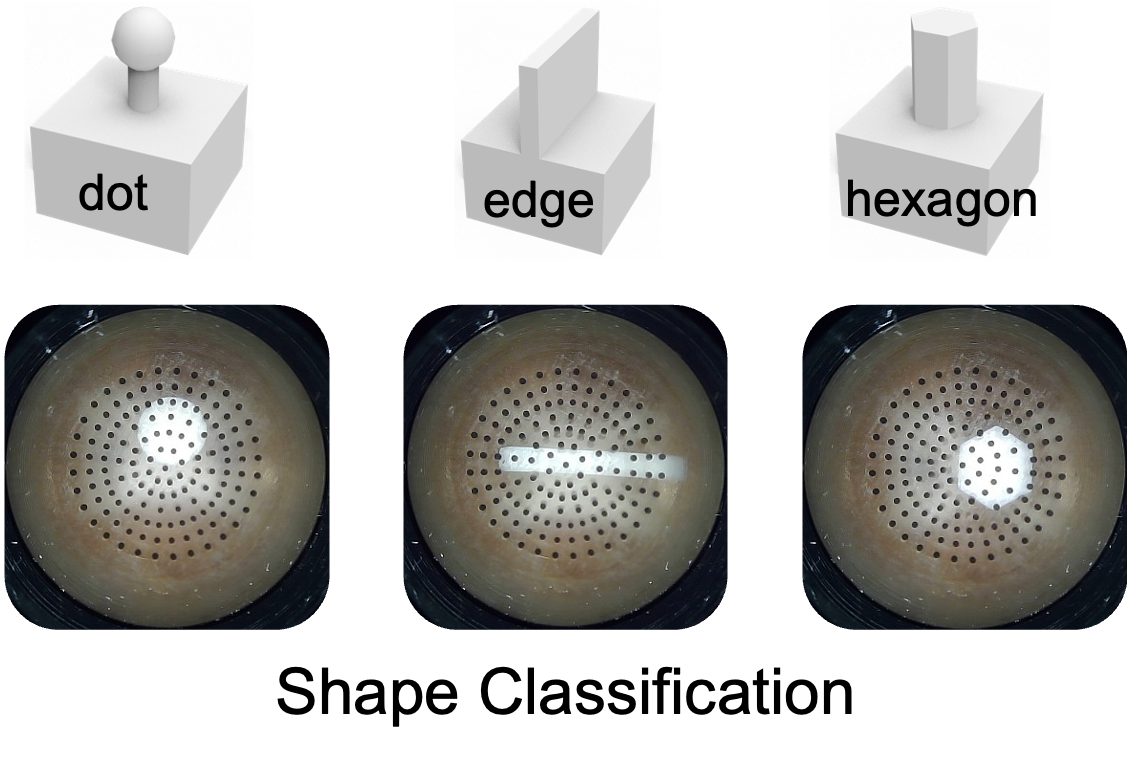
Shape Classification
Recognising local contact geometry across different tactile sensors.
Multi-Sensor Tactile Dataset
A Multi-Sensor Dataset and Benchmark for Cross-Sensor Vision-Based Tactile Perception
Seven sensors. Three tasks. One controlled benchmark for sensor shift.
TacVerse provides 106,800 tactile images and standardised protocols for within-sensor learning, zero-shot cross-sensor transfer, and few-shot target adaptation.
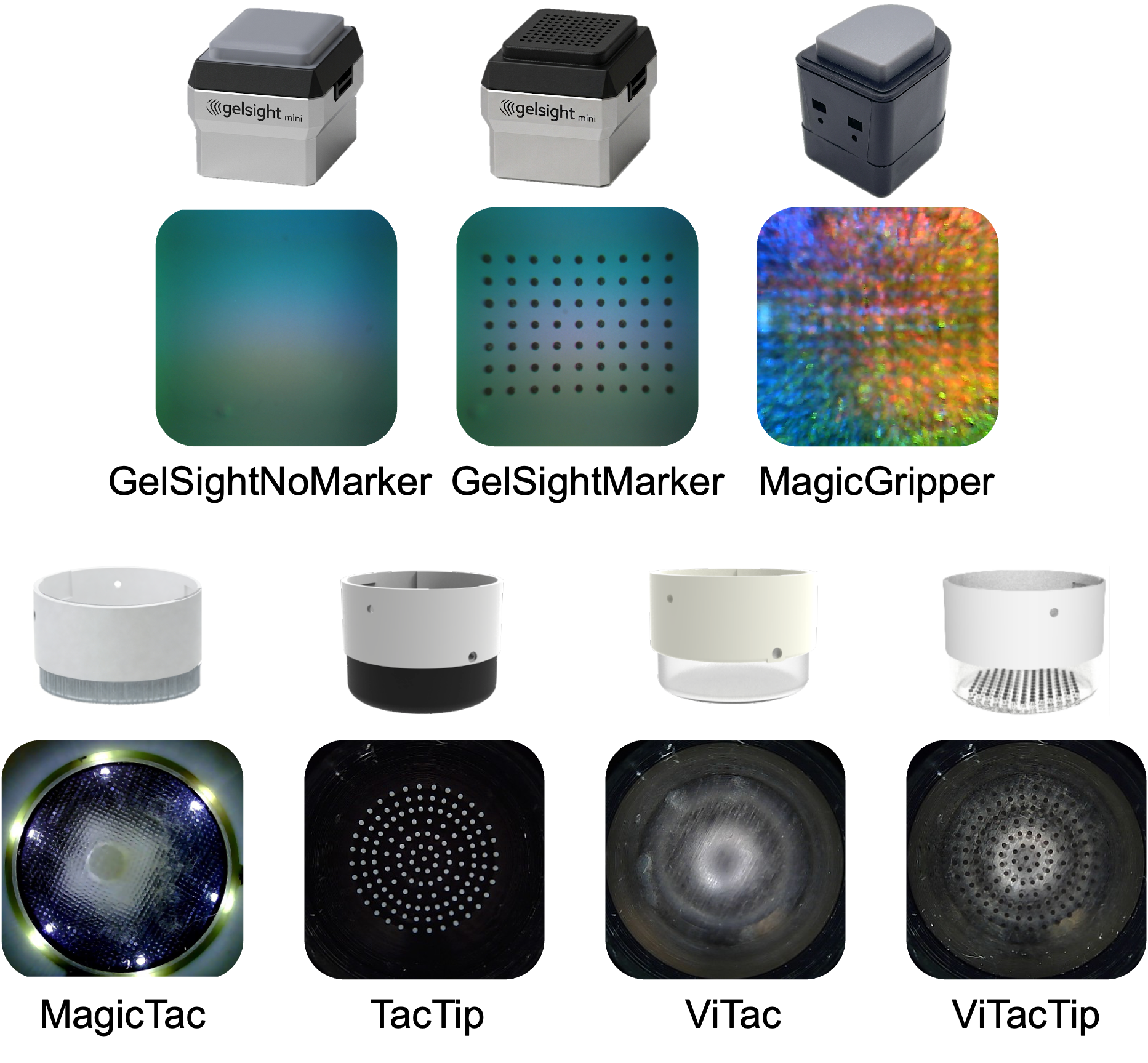
Sensor Shift
Vision-based tactile sensors encode contact through different optical, mechanical, and marker configurations. As a result, a model that performs well on one sensor may not transfer reliably to another. TacVerse provides task-aligned data and controlled protocols to make this sensor-shift gap measurable and reproducible.
Covering IMM, MDM, MFM, and hybrid sensing configurations.
Dataset & Tasks
Recognising local contact geometry across different tactile sensors.
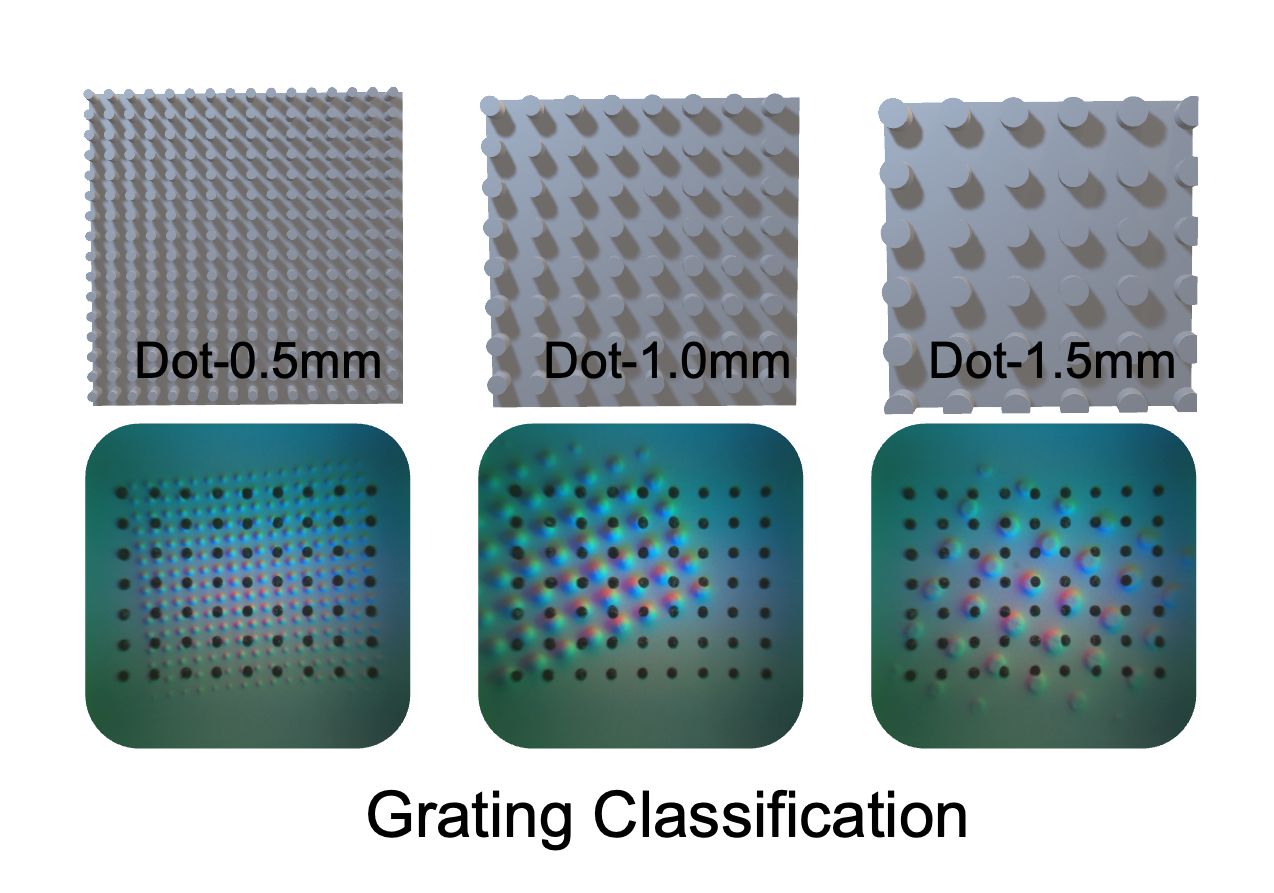
Distinguishing fine-grained line and dot gratings with different spatial scales.
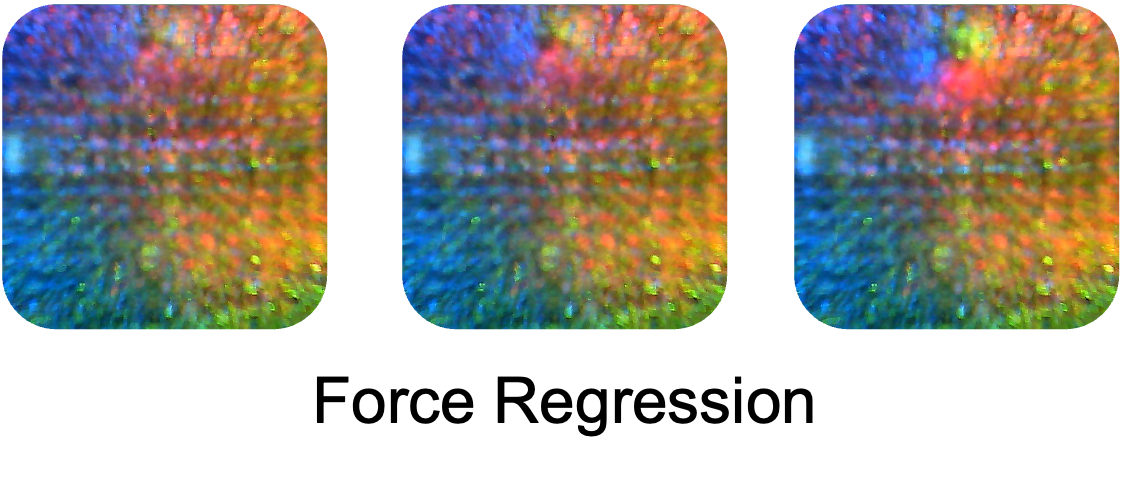
Estimating normal and shear forces directly from tactile observations.
Evaluation Protocols
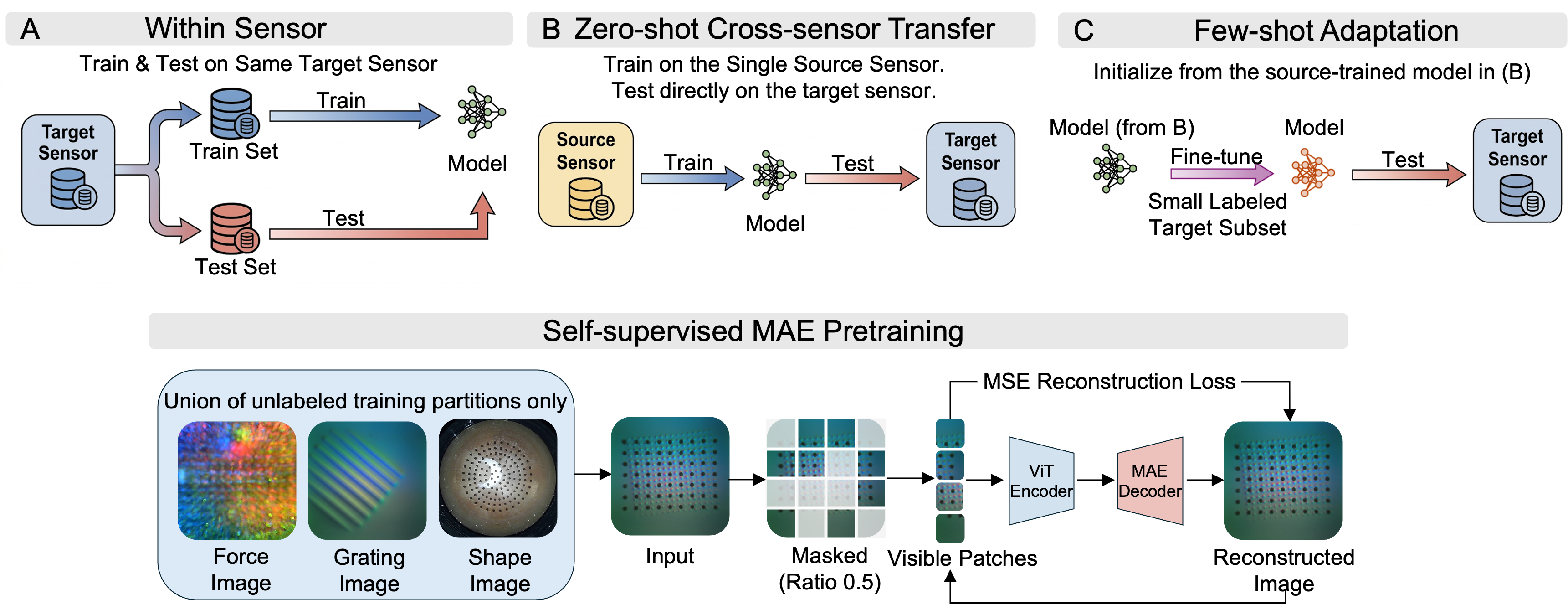
Train and evaluate on the same tactile sensor.
Train on a source sensor and evaluate directly on a target sensor without target labels.
Fine-tune the source-trained model using a small labelled subset from the target-sensor training split. Evaluated for force regression.
Results Summary
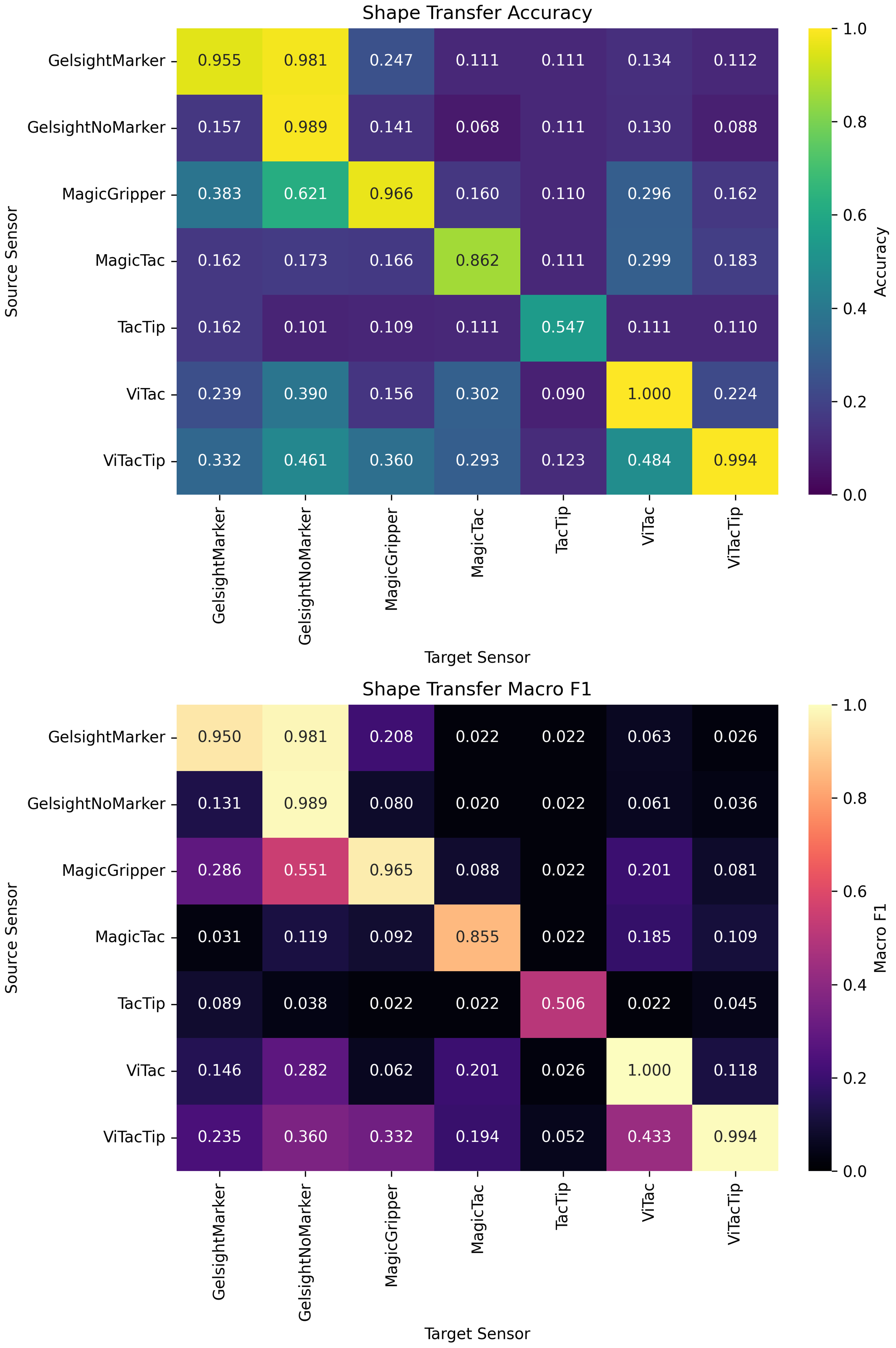
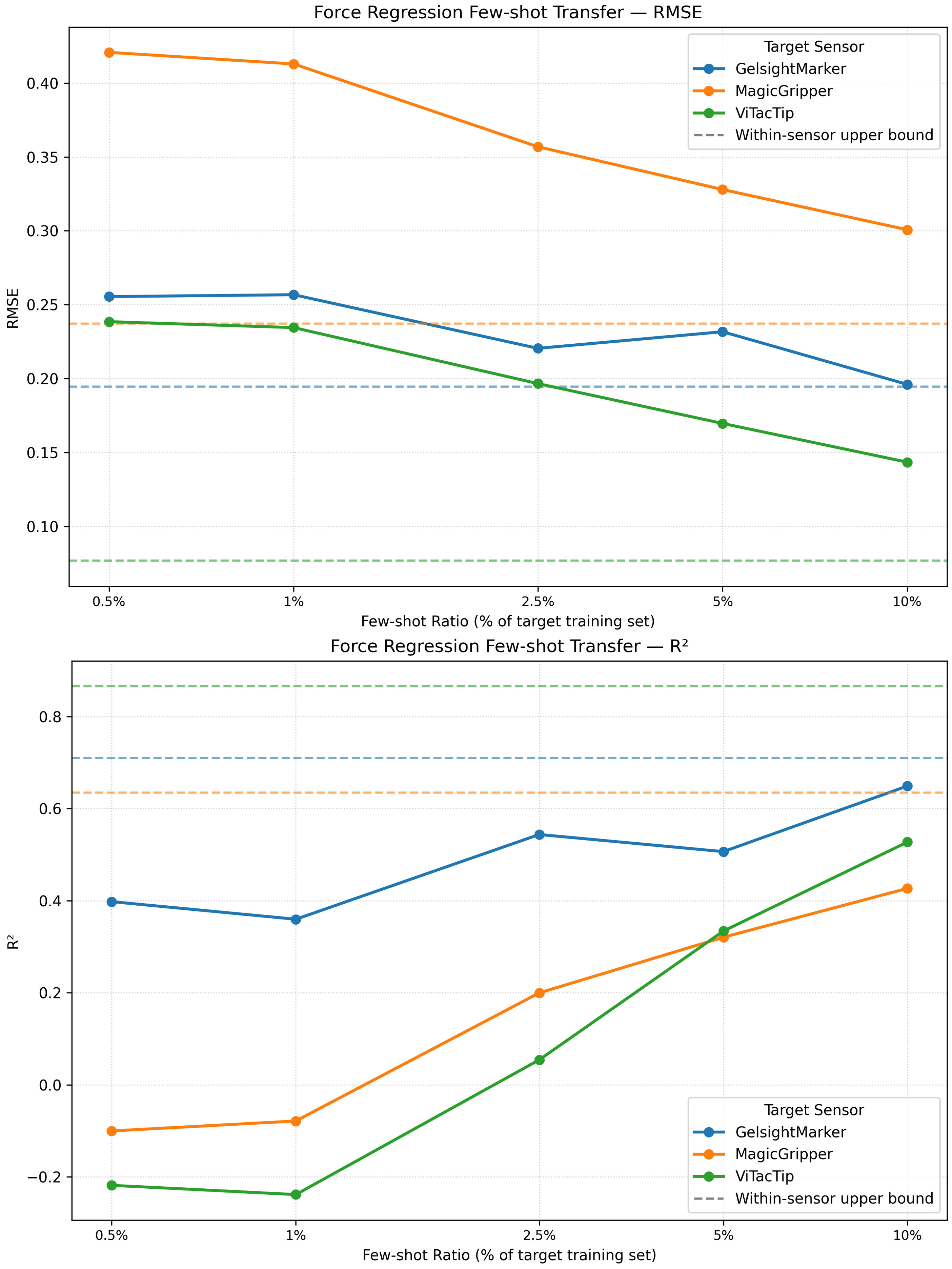
MAE pretraining delivers the most consistent representation across the evaluated tasks and sensors.
Resources & Citation
Tactile images, annotations, metadata, and fixed data splits.
View DatasetTraining, evaluation, and experiment configuration files.
View CodeFull benchmark design, experimental settings, and results.
Read PaperIf you find TacVerse useful, please cite:
[update later]